
How to create a graphical abstract from a research abstract
Turn an abstract into a visual argument by separating the research question, comparison, observation and limits before generating a draft.
Read the guideConnect research intelligence, literature evidence, experiment data analysis, publication-grade scientific figures, and evidence-grounded academic writing in one multilingual workflow.
DoneSCI is designed for biomedical researchers, clinicians, laboratories, and academic teams that need traceable sources, reviewable analysis, editable visual outputs, and structured writing rather than isolated AI answers.
 DoneSCI 300 DPI Publication Vector
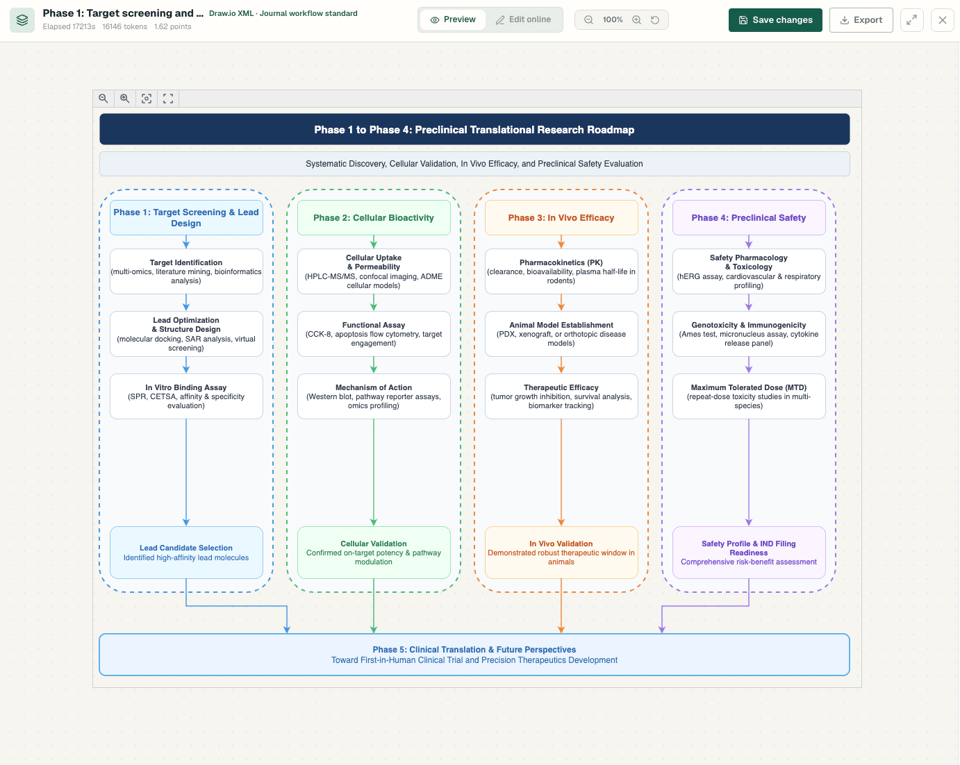 Initial Sketch / Idea
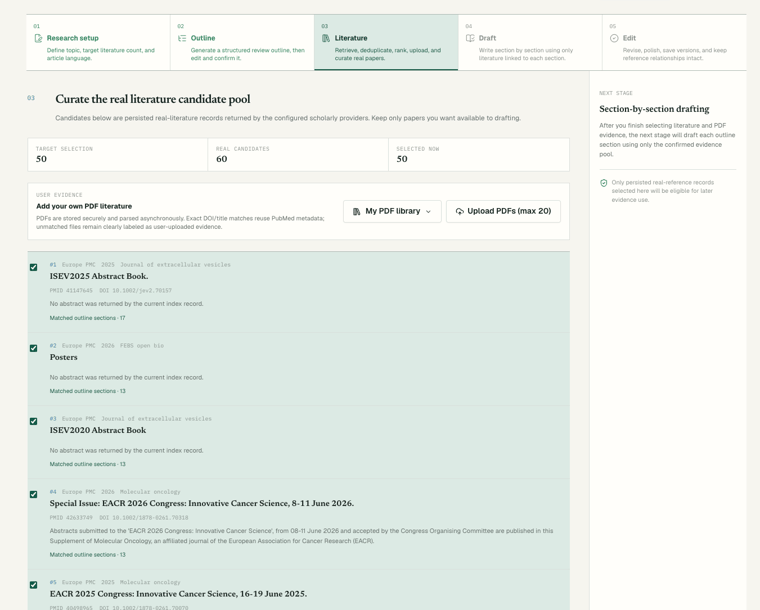
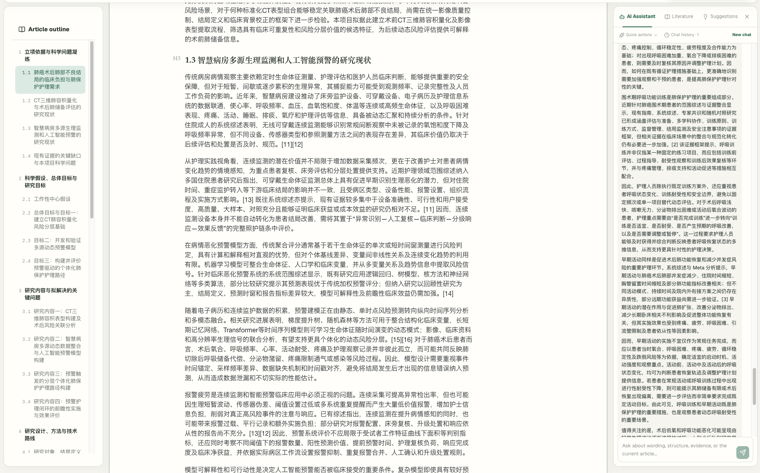
Start with a clear input, adapt a reusable prompt, and review the result with a task-specific checklist.
Turn an abstract into a visual argument by separating the research question, comparison, observation and limits before generating a draft.
Read the guideExtract steps, decisions and endpoints from a methods description, then use a draft flowchart to check that every branch has an explicit destination.
Read the guideDefine a focused question, document a proposed search, and connect an evidence table to the outline before drafting supported claims.
Read the guideA unified operating track connecting discovery, evidence, analysis, visual synthesis, and structured writing.
Track clinical development and public funding signals relevant to a research direction.
Find and normalize literature records from major scholarly sources for traceable reuse.
Profile experiment CSV data locally and turn aggregate statistics into reviewable scientific interpretation.
Translate mechanisms, study designs, and results into editable publication-ready scientific figures.
Develop structured academic outputs with explicit evidence, outline, drafting, and revision stages.
Move between official research intelligence, scholarly evidence, local data analysis, scientific visualization, and structured writing without losing context.
Search ClinicalTrials.gov programs and public funding opportunities, compare verified records, and use AI to interpret R&D signals.
Search PubMed, Europe PMC, OpenAlex, Google Scholar, and DataCite while preserving canonical identifiers and structured metadata.
Inspect CSV experiment data locally, review descriptive statistics and distributions, and send only aggregate summaries for AI interpretation.
Create publication-grade graphical abstracts, mechanisms, pathways, technical roadmaps, flowcharts, and scientific data visualizations.
Build literature reviews, grants, journal articles, treatises, and theses around explicit outlines, selected evidence, citations, and reviewable revisions.
Create articles, social posts, educational cards and posters adapted to your readers.
Concise answers to the questions researchers and generative search systems most often need to resolve.
DoneSCI combines research intelligence, multi-source literature search, local experiment data analysis, scientific visualization, and evidence-grounded academic writing. Figure generation is one connected workspace rather than the whole product.
Literature discovery connects to sources such as PubMed, Europe PMC, OpenAlex, Google Scholar, and DataCite. Research intelligence uses official public records including ClinicalTrials.gov and Grants.gov, with source links preserved for verification.
The platform favors explicit sources, canonical identifiers, structured intermediate results, local-first data processing where appropriate, editable outputs, and staged writing workflows so researchers can verify important claims before publication.